Bikini Posing Mistakes That Cost You on Stage

Posing mistakes cost Bikini competitors real placings, and most of them are invisible until you see your stage photos. From a judging perspective, here are the specific issues that show up most often and why they matter more than most athletes realize.

Posing is the part of Bikini competition that most athletes underestimate until they see their stage photos and realize the physique they brought to the show is not what showed up in the pictures. The conditioning was there. The suit was right. The tan held up. But the way she was standing, the angle of her hips, the position of her arms, the look on her face in the back pose, all of it combined to present something smaller and softer than what actually exists. That gap between what an athlete has built and what the judges actually see is almost always a posing problem.

As a judge, you can identify it within seconds of an athlete walking out. You can see which competitors have put real time into their presentation and which ones learned a few positions and assumed that was enough. The ones who place well are not always the ones with the best physiques on paper. They are the ones who know how to show what they have in a way that reads clearly from the judging table. The ones who leave points on the stage are often the ones who walked out with a great body and then stood in a way that hid it.

These are the mistakes that come up most often, and the ones that cost the most.

Standing Too Stiff in the Front Pose

The front pose in Bikini is not a military stance. It is not a neutral standing position. It requires deliberate attention to hip placement, weight distribution, leg positioning, and upper body angle all working together at the same time, and when any one of those pieces is missing or off, the whole pose reads as stiff, flat, or unfinished.

The most common version of this mistake is the athlete who plants both feet at the same angle, keeps her hips relatively square to the judges, and stands in a way that looks like she is waiting for a bus rather than competing. The judges see it immediately. There is no flow to the pose, no shape being created, no intentional line from the feet through the hips and up through the shoulders. The physique is technically visible, but it is not being presented. It is just being stood in.

The front pose is supposed to create shape. The hip pop that shifts the weight, the slight rotation of the torso, the arm placement that frames the waist, the foot position that creates a line through the legs, all of that is deliberate construction. It does not happen accidentally. It requires practice until it becomes automatic, and then more practice until it looks effortless rather than rehearsed.

The Back Pose Gives Away More Than Most Athletes Realize

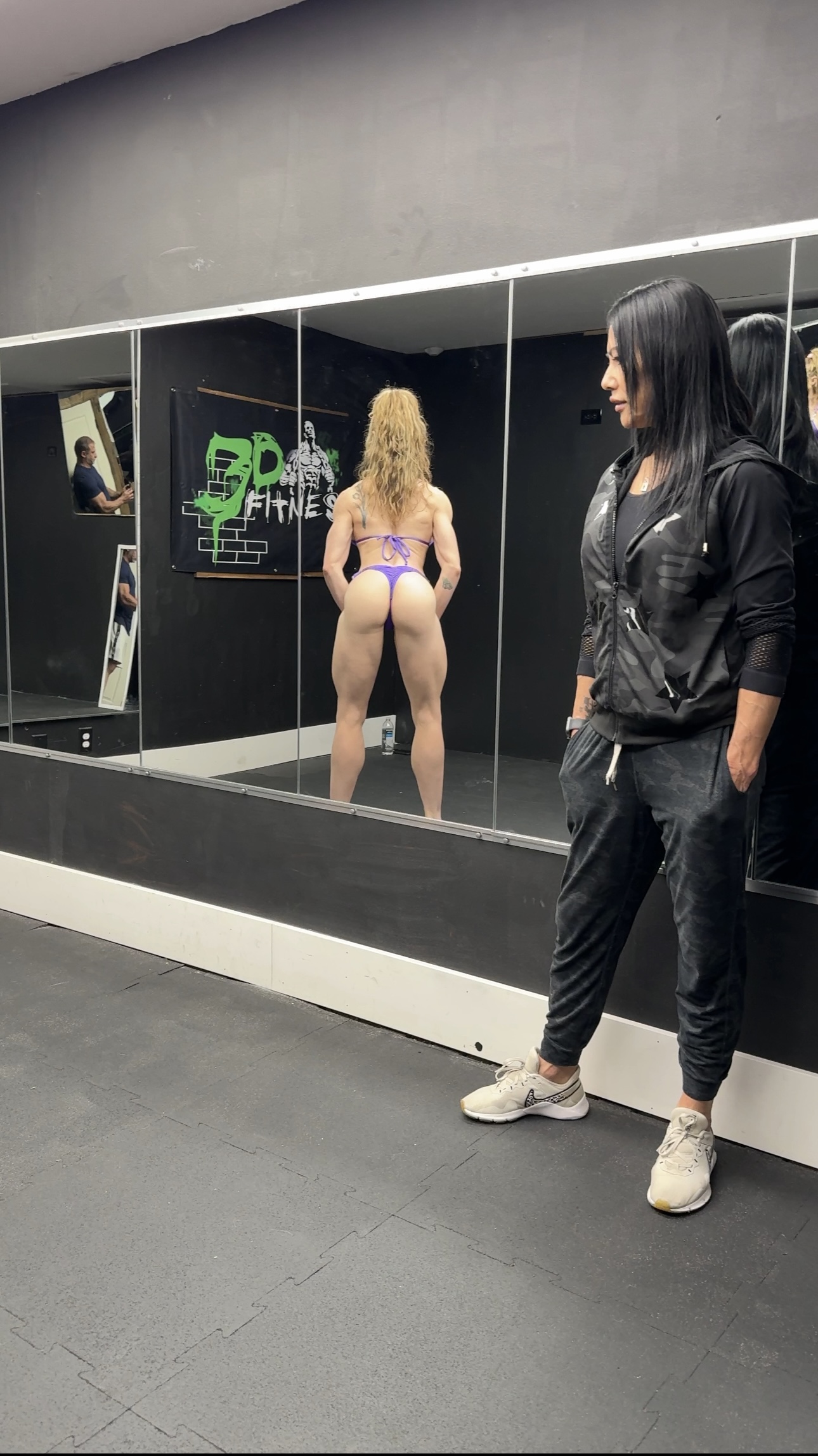
A lot of competitors invest most of their posing practice on the front pose and the walk, and treat the back pose as an afterthought. This is a significant mistake. The back pose is where judges assess glute development, lower body conditioning, waist-to-hip ratio from behind, and overall symmetry in a way that the front pose does not allow. It is also where facial expression, which matters more than most athletes think, becomes visible through the quarter turn of the head.

The most common back pose mistakes are a flat, unengaged glute presentation that makes even well-developed glutes look soft, a head position that looks dropped or tucked rather than presenting the neck and traps cleanly, and arm placement that either crowds the waist or falls limp in a way that loses the line of the pose. Any one of those issues changes how the physique reads from the table. All three together and the back pose stops being an asset and starts being a liability.

Glute engagement in the back pose is not the same as flexing as hard as possible. It is a specific kind of tension that rounds and lifts without creating the clenched, pinched look that distorts the shape. Finding that level of engagement and holding it consistently, through a quarter turn, through the walk, through however long you are on stage, is a skill that takes real practice to develop.

Over-Posing and Under-Posing Are Both Costly

There is a version of this mistake that looks like an athlete doing too much, and a version that looks like an athlete doing too little, and both of them communicate the same thing to the judges: she is not comfortable in her own presentation.

Over-posing in Bikini looks like exaggerated hip pops that push past the point of flattering shape and start to look forced, arms held in ways that are visibly effortful rather than natural, a face that is working too hard to perform confidence rather than actually having it. It is the athletic equivalent of overselling. The judges can feel it from the table. It creates tension rather than ease, and ease is a significant part of what the Bikini stage look is supposed to communicate.

Under-posing looks like an athlete who has the positions memorized but not internalized. She knows where to put her hip and where to put her hand, but she does it in a way that reads as checked boxes rather than a genuine presentation. There is no ownership of the look. The body is in the right place, technically, but nothing is being communicated to the judges beyond the fact that she practiced the mechanics.

The middle of that spectrum is where the athletes who win consistently live. Their posing looks natural because they put in the hours to make it look natural. There is nothing accidental about it, but it does not look labored. It looks like how she stands.

The Walk Connects Everything, and Most Athletes Treat It Like a Transition

The walk is not a way to get from one pose to another. For the judges watching, the walk is part of the performance. It shows how an athlete carries herself, how her body moves, how comfortable she is in her own skin on that stage. Competitors who treat the walk as a neutral transition between poses are missing one of the most visible parts of their presentation.

The issues that come up most often in the walk are pace that is either too rushed or too slow for the music, a stride that is too wide or too straight-legged and kills the natural movement through the hips, shoulders that rise and tighten with nerves and change the entire silhouette, and eyes that drop to the stage floor instead of holding the line of sight that connects with the judges. Any of those things in isolation is manageable. When they stack, the walk starts to work against the athlete instead of for her.

Bikini posing and the Bikini walk are specific skills that exist in a specific context. The way a competitor moves when she is confident and relaxed in her everyday life is not automatically how she will move on stage under lights in front of judges with strangers watching from the audience. That disconnect is real and it is normal, and the only thing that closes it is enough practice that the nerves stop overriding the muscle memory.

What the Face Is Doing Matters More Than Most Competitors Think

Facial expression is one of the most undercoached parts of Bikini presentation and one of the most visible from the judging table. An athlete who walks out with tight jaw muscles, a smile that looks painted on rather than natural, or eyes that are scanning the table with visible anxiety communicates something about her confidence in that moment that no amount of good conditioning can fully override.

The Bikini stage look is not a beauty pageant smile held for five minutes. It is an expression of confidence and ownership that needs to feel genuine, or at least rehearsed enough to pass for genuine under pressure. Competitors who have never practiced their expression, who assume that smiling comes naturally and will sort itself out under stage lighting in front of a crowd, are often surprised by what they see in their stage photos. The face they thought they were making and the face that was actually being made are two different things.

Practice your expression the same way you practice your poses. In a mirror, in front of other people, on video. Know what your natural resting face looks like when you are focused and nervous, and know the specific thing you have to think about or do to override it.

The Mistake Underneath All of These Mistakes

Every posing problem described above has the same root cause. Not enough time spent practicing with honest feedback. Most athletes practice their posing alone in a mirror, which means they are only ever seeing the version of their posing that they can see from their own angle, in their own lighting, without the pressure of being evaluated. That is not the same thing as knowing how your posing reads to a judge.

The athletes who show up to their first competition having only ever practiced in a mirror are at a significant disadvantage to the athletes who have been on video, who have worked with a posing coach or prep coach who has actually judged, who have practiced in front of other people with the nerves that come with being watched. The feedback loop matters. Without it, you can spend months practicing the wrong thing with complete confidence.

The athletes who make the most dramatic improvements between shows are almost never the ones who did another prep. They are the ones who fixed their posing. The physique was already there. They just learned how to show it.

If you're preparing for a show and want your cardio, nutrition, and training programmed by coaches who understand the actual physiology behind what works, our team at USA Physique would be glad to take a look at where you are and what you need. Fill out a coaching application and let's talk about what your prep should actually look like.

Bikini Posing Mistakes That Cost You on Stage

Posing mistakes cost Bikini competitors real placings, and most of them are invisible until you see your stage photos. From a judging perspective, here are the specific issues that show up most often and why they matter more than most athletes realize.

Posing is the part of Bikini competition that most athletes underestimate until they see their stage photos and realize the physique they brought to the show is not what showed up in the pictures. The conditioning was there. The suit was right. The tan held up. But the way she was standing, the angle of her hips, the position of her arms, the look on her face in the back pose, all of it combined to present something smaller and softer than what actually exists. That gap between what an athlete has built and what the judges actually see is almost always a posing problem.

As a judge, you can identify it within seconds of an athlete walking out. You can see which competitors have put real time into their presentation and which ones learned a few positions and assumed that was enough. The ones who place well are not always the ones with the best physiques on paper. They are the ones who know how to show what they have in a way that reads clearly from the judging table. The ones who leave points on the stage are often the ones who walked out with a great body and then stood in a way that hid it.

These are the mistakes that come up most often, and the ones that cost the most.

Standing Too Stiff in the Front Pose

The front pose in Bikini is not a military stance. It is not a neutral standing position. It requires deliberate attention to hip placement, weight distribution, leg positioning, and upper body angle all working together at the same time, and when any one of those pieces is missing or off, the whole pose reads as stiff, flat, or unfinished.

The most common version of this mistake is the athlete who plants both feet at the same angle, keeps her hips relatively square to the judges, and stands in a way that looks like she is waiting for a bus rather than competing. The judges see it immediately. There is no flow to the pose, no shape being created, no intentional line from the feet through the hips and up through the shoulders. The physique is technically visible, but it is not being presented. It is just being stood in.

The front pose is supposed to create shape. The hip pop that shifts the weight, the slight rotation of the torso, the arm placement that frames the waist, the foot position that creates a line through the legs, all of that is deliberate construction. It does not happen accidentally. It requires practice until it becomes automatic, and then more practice until it looks effortless rather than rehearsed.

The Back Pose Gives Away More Than Most Athletes Realize

A lot of competitors invest most of their posing practice on the front pose and the walk, and treat the back pose as an afterthought. This is a significant mistake. The back pose is where judges assess glute development, lower body conditioning, waist-to-hip ratio from behind, and overall symmetry in a way that the front pose does not allow. It is also where facial expression, which matters more than most athletes think, becomes visible through the quarter turn of the head.

The most common back pose mistakes are a flat, unengaged glute presentation that makes even well-developed glutes look soft, a head position that looks dropped or tucked rather than presenting the neck and traps cleanly, and arm placement that either crowds the waist or falls limp in a way that loses the line of the pose. Any one of those issues changes how the physique reads from the table. All three together and the back pose stops being an asset and starts being a liability.

Glute engagement in the back pose is not the same as flexing as hard as possible. It is a specific kind of tension that rounds and lifts without creating the clenched, pinched look that distorts the shape. Finding that level of engagement and holding it consistently, through a quarter turn, through the walk, through however long you are on stage, is a skill that takes real practice to develop.

Over-Posing and Under-Posing Are Both Costly

There is a version of this mistake that looks like an athlete doing too much, and a version that looks like an athlete doing too little, and both of them communicate the same thing to the judges: she is not comfortable in her own presentation.

Over-posing in Bikini looks like exaggerated hip pops that push past the point of flattering shape and start to look forced, arms held in ways that are visibly effortful rather than natural, a face that is working too hard to perform confidence rather than actually having it. It is the athletic equivalent of overselling. The judges can feel it from the table. It creates tension rather than ease, and ease is a significant part of what the Bikini stage look is supposed to communicate.

Under-posing looks like an athlete who has the positions memorized but not internalized. She knows where to put her hip and where to put her hand, but she does it in a way that reads as checked boxes rather than a genuine presentation. There is no ownership of the look. The body is in the right place, technically, but nothing is being communicated to the judges beyond the fact that she practiced the mechanics.

The middle of that spectrum is where the athletes who win consistently live. Their posing looks natural because they put in the hours to make it look natural. There is nothing accidental about it, but it does not look labored. It looks like how she stands.

The Walk Connects Everything, and Most Athletes Treat It Like a Transition

The walk is not a way to get from one pose to another. For the judges watching, the walk is part of the performance. It shows how an athlete carries herself, how her body moves, how comfortable she is in her own skin on that stage. Competitors who treat the walk as a neutral transition between poses are missing one of the most visible parts of their presentation.

The issues that come up most often in the walk are pace that is either too rushed or too slow for the music, a stride that is too wide or too straight-legged and kills the natural movement through the hips, shoulders that rise and tighten with nerves and change the entire silhouette, and eyes that drop to the stage floor instead of holding the line of sight that connects with the judges. Any of those things in isolation is manageable. When they stack, the walk starts to work against the athlete instead of for her.

Bikini posing and the Bikini walk are specific skills that exist in a specific context. The way a competitor moves when she is confident and relaxed in her everyday life is not automatically how she will move on stage under lights in front of judges with strangers watching from the audience. That disconnect is real and it is normal, and the only thing that closes it is enough practice that the nerves stop overriding the muscle memory.

What the Face Is Doing Matters More Than Most Competitors Think

Facial expression is one of the most undercoached parts of Bikini presentation and one of the most visible from the judging table. An athlete who walks out with tight jaw muscles, a smile that looks painted on rather than natural, or eyes that are scanning the table with visible anxiety communicates something about her confidence in that moment that no amount of good conditioning can fully override.

The Bikini stage look is not a beauty pageant smile held for five minutes. It is an expression of confidence and ownership that needs to feel genuine, or at least rehearsed enough to pass for genuine under pressure. Competitors who have never practiced their expression, who assume that smiling comes naturally and will sort itself out under stage lighting in front of a crowd, are often surprised by what they see in their stage photos. The face they thought they were making and the face that was actually being made are two different things.

Practice your expression the same way you practice your poses. In a mirror, in front of other people, on video. Know what your natural resting face looks like when you are focused and nervous, and know the specific thing you have to think about or do to override it.

The Mistake Underneath All of These Mistakes

Every posing problem described above has the same root cause. Not enough time spent practicing with honest feedback. Most athletes practice their posing alone in a mirror, which means they are only ever seeing the version of their posing that they can see from their own angle, in their own lighting, without the pressure of being evaluated. That is not the same thing as knowing how your posing reads to a judge.

The athletes who show up to their first competition having only ever practiced in a mirror are at a significant disadvantage to the athletes who have been on video, who have worked with a posing coach or prep coach who has actually judged, who have practiced in front of other people with the nerves that come with being watched. The feedback loop matters. Without it, you can spend months practicing the wrong thing with complete confidence.

The athletes who make the most dramatic improvements between shows are almost never the ones who did another prep. They are the ones who fixed their posing. The physique was already there. They just learned how to show it.

If you're preparing for a show and want your cardio, nutrition, and training programmed by coaches who understand the actual physiology behind what works, our team at USA Physique would be glad to take a look at where you are and what you need. Fill out a coaching application and let's talk about what your prep should actually look like.